


Scarcity and adaptation: how water stress is reshaping policy and markets
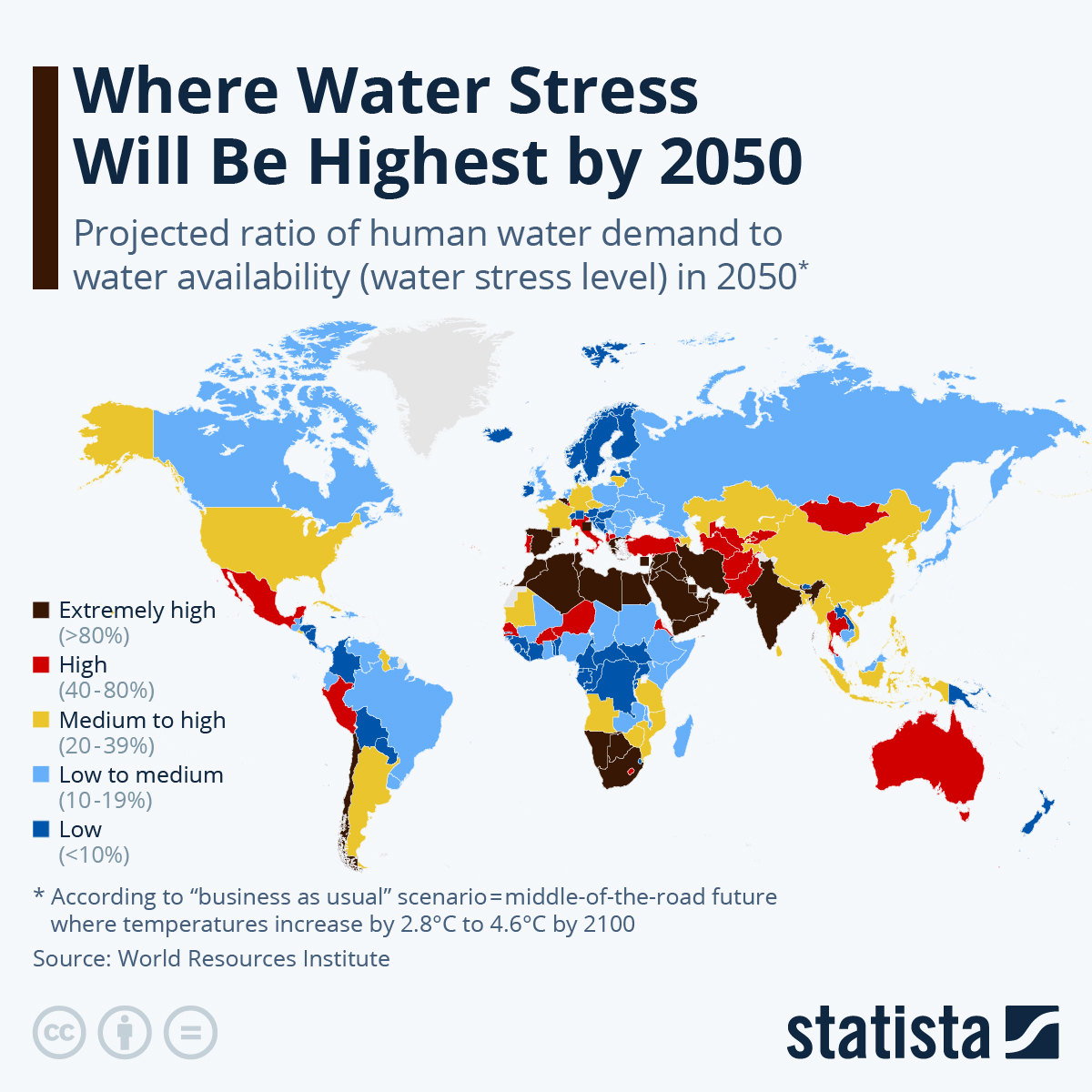
Water stress is emerging as one of the most immediate and disruptive consequences of climate change. Unlike longer-term mitigation goals, water scarcity forces governments, businesses, and communities to respond now — often under conditions of uncertainty, political pressure, and limited resources.
From agriculture to energy to urban planning, access to reliable water supplies is reshaping policy choices and market behaviour.
1. Water moves from environmental issue to economic constraint
Historically treated as a background environmental concern, water availability is increasingly recognised as a binding economic constraint. Droughts, groundwater depletion, and unpredictable rainfall patterns are affecting food production, industrial output, and electricity generation.
Why it matters:
When water becomes scarce, trade-offs between sectors intensify, raising political and economic risks.
What to watch:
-
Restrictions on agricultural water use
-
Energy production disruptions linked to cooling needs
-
Rising costs for industrial users
2. Governments prioritise resilience over expansion
Policy responses are shifting toward resilience: upgrading infrastructure, reducing leakage, expanding storage, and improving allocation systems. Large-scale expansion projects remain politically attractive, but they face growing scrutiny over cost, feasibility, and environmental impact.
Why it matters:
Resilience investments tend to deliver incremental benefits, making them harder to defend politically despite their long-term value.
3. Financing pressures limit adaptation options
Water infrastructure is capital-intensive and often slow to deliver returns. Higher borrowing costs and constrained public budgets are narrowing the range of feasible adaptation projects, particularly in regions already facing fiscal pressure.
These constraints intersect with broader dynamics shaped by central banks and interest rates, which continue to influence public investment capacity.
4. Markets respond through pricing and risk transfer
Private markets are beginning to reflect water scarcity more explicitly. Insurance premiums, agricultural contracts, and commodity pricing increasingly incorporate water risk, even where regulation lags behind physical reality.
Why it matters:
Market signals can accelerate behavioural change faster than policy, but they may also deepen inequality if unmanaged.
5. Water stress intersects with geopolitics
Shared river basins and cross-border aquifers are becoming sources of tension as scarcity intensifies. Negotiations over allocation, infrastructure, and data sharing are increasingly linked to broader diplomatic relationships.
In some cases, water-related measures interact with wider economic pressure, including sanctions, amplifying their downstream effects.
6. Adaptation without coordination
Despite growing recognition of water stress, responses remain fragmented. National strategies often fail to align with regional realities, and short political cycles complicate long-term planning.
Why it matters:
Fragmentation raises the risk of misallocation and conflict, even where solutions exist.
What happens next
Water scarcity is likely to become a defining policy issue of the coming decade — not because of dramatic announcements, but because of accumulating constraints. Governments and markets will continue to adapt unevenly, balancing cost, equity, and urgency under growing pressure.
Sources
Climate assessments, water authority data, infrastructure reports, and policy analysis.
