

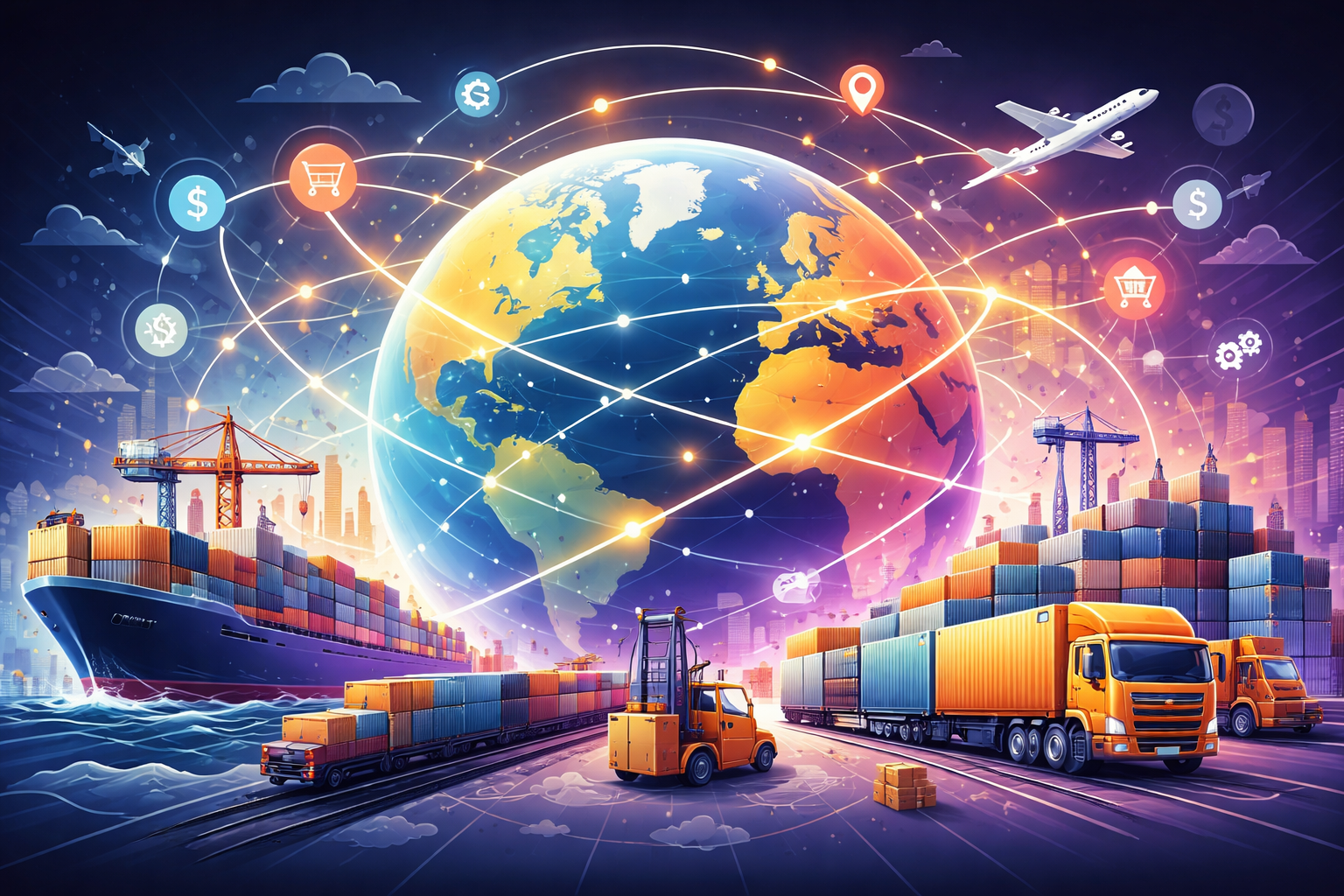

Global trade explained: how supply chains, tariffs, and rules really work
Global trade is often reduced to headlines about tariffs, trade wars, or deficits. In practice, it is a dense system of rules, logistics, financing, and political compromise that shapes how goods move, who benefits, and where vulnerabilities lie.
This explainer sets out how global trade actually works — and why disruptions now carry broader economic and geopolitical consequences.
1. What “global trade” really refers to
Global trade is not just the exchange of goods across borders. It includes:
-
Physical supply chains (production, transport, storage)
-
Trade rules and agreements
-
Tariffs, quotas, and standards
-
Financial systems that enable cross-border payments
-
Dispute resolution mechanisms
Most trade flows depend on predictability rather than speed. When predictability breaks down, costs rise rapidly.
Why this matters:
Trade is a system — not a series of bilateral transactions.
2. Supply chains matter more than borders
Modern trade is organised around supply chains, not countries. A single product may involve components sourced from multiple regions, assembled elsewhere, and sold globally.
Efficiency comes from:
-
Specialisation
-
Just-in-time logistics
-
Stable transport routes
-
Regulatory alignment
But efficiency also creates fragility.
Why it matters:
Disruptions at one point in a supply chain can cascade globally, even without formal trade restrictions.
3. Tariffs are only one tool — and often not the most important
Tariffs attract attention because they are visible and politically salient. In reality, many trade outcomes are shaped by less visible measures:
-
Technical standards
-
Product certification requirements
-
Rules of origin
-
Licensing regimes
-
Environmental and safety regulations
These can influence trade flows as much as — or more than — headline tariff rates.
Key point:
Trade policy often operates through rules, not just taxes.
4. Trade rules shape power and leverage
Trade agreements determine:
-
Market access
-
Dispute resolution processes
-
Enforcement mechanisms
Larger economies often have more influence over rule-setting, while smaller economies face constraints on negotiation capacity.
These dynamics overlap with broader patterns of corporate power, where firms influence trade outcomes through scale, positioning, and regulatory engagement.
5. Sanctions blur the line between trade and security
Economic sanctions increasingly intersect with trade systems. Restrictions on finance, technology, and logistics affect not only targeted countries but also firms operating across borders.
The mechanics and consequences of these measures are explored in our explainer on sanctions.
Why it matters:
Trade systems designed for efficiency are now being used as instruments of pressure.
6. Financing underpins trade flows
Trade depends on access to:
-
Credit
-
Insurance
-
Currency liquidity
When financial conditions tighten, trade volumes often contract — even without policy changes.
These pressures are shaped by decisions driven by central banks and interest rates, which influence borrowing costs and risk tolerance.
7. Technology and standards reshape trade
Digital systems increasingly govern trade logistics, compliance, and documentation. At the same time, disputes over technology standards and data flows are becoming central to trade negotiations.
Regulatory differences in technology governance — including AI regulation — now affect how digital goods and services cross borders.
Why it matters:
Trade is no longer just about goods — it is about systems and standards.
8. Climate policy intersects with trade
Climate measures such as carbon pricing, border adjustments, and sustainability standards are reshaping trade relationships.
These policies link closely to debates around net zero, where trade rules must reconcile environmental goals with competitiveness.
Why it matters:
Trade rules increasingly reflect climate priorities, adding complexity and friction.
9. What global trade is becoming
Global trade is not ending, but it is changing. Key trends include:
-
Greater emphasis on resilience over efficiency
-
More regionalisation
-
Increased use of trade as a strategic tool
-
Higher compliance and documentation costs
These shifts do not reverse globalisation, but they redefine its structure.
What happens next
Trade systems are likely to become more fragmented and more regulated. Governments and firms will balance openness against security, resilience, and political pressure.
Understanding how trade actually works — beyond tariffs and rhetoric — is essential for interpreting economic and geopolitical developments in the years ahead.
Sources
Trade agreements, logistics data, policy analysis, and economic research.
