

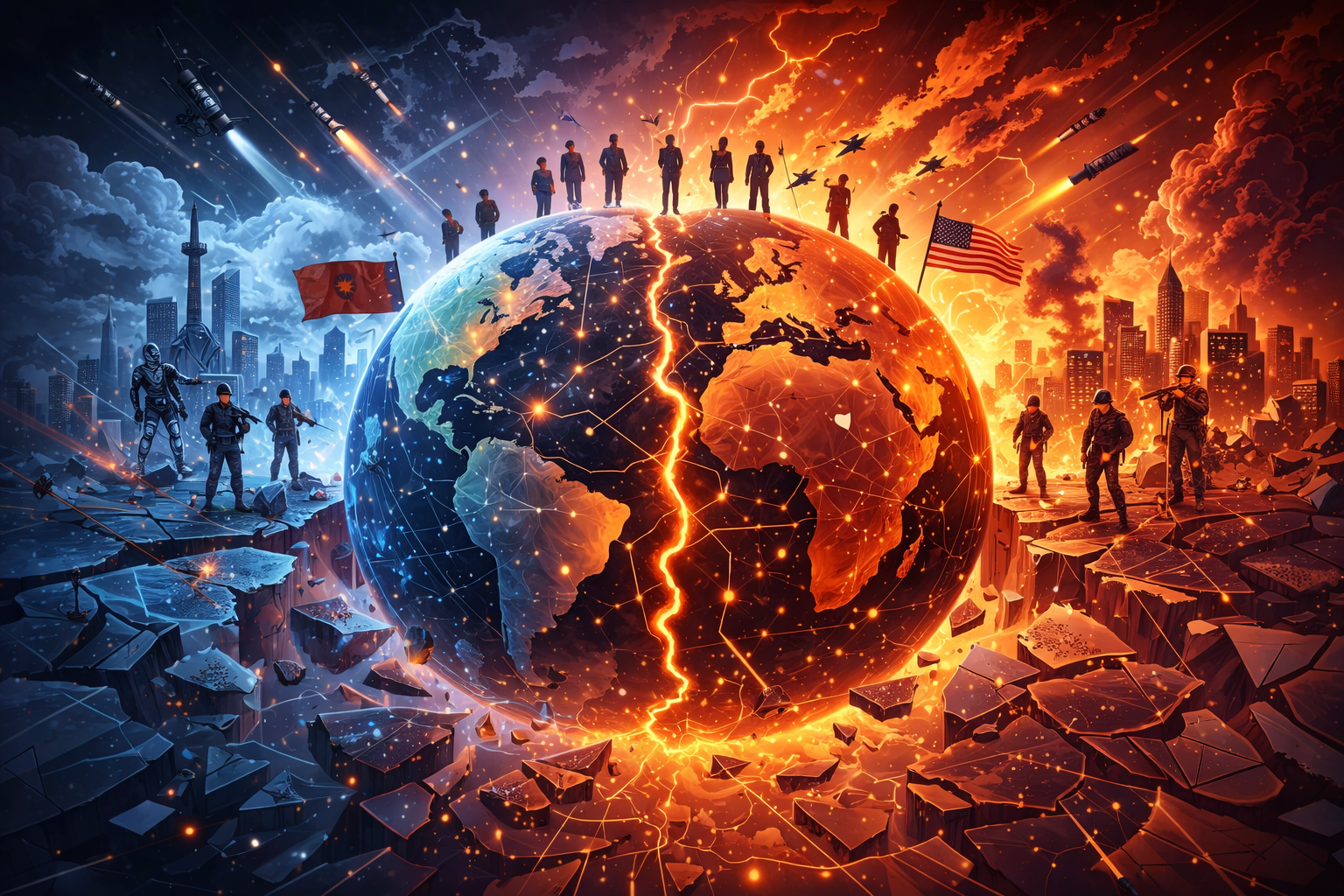

The risk of drift: how global order is being reshaped quietly
Global order is not being rewritten through dramatic announcements or formal treaties. Instead, it is shifting quietly — through delayed decisions, fragmented enforcement, and the gradual erosion of shared assumptions about responsibility and leadership.
While attention often focuses on flashpoints and crises, the deeper transformation is subtler: a growing gap between global challenges and the mechanisms designed to manage them.
1. Institutions persist, but coordination weakens
International institutions remain active, but their ability to coordinate collective action has diminished. Formal frameworks still exist, yet consensus is harder to reach and enforcement more selective.
Why it matters:
When institutions lose the capacity to act decisively, outcomes increasingly depend on informal arrangements and unilateral decisions.
What to watch:
-
Delays in multilateral agreements
-
Increased reliance on bilateral deals
-
Selective compliance with international rulings
2. Strategic ambiguity becomes policy
Governments are increasingly favouring ambiguity over commitment. Rather than clearly defining red lines or long-term objectives, officials leave space for flexibility — often at the cost of predictability.
Why it matters:
Ambiguity reduces immediate risk but increases long-term uncertainty, particularly for markets and smaller states.
This approach reflects a broader hesitation to absorb political or economic costs in an environment already shaped by constraint.
3. Economic pressure shapes geopolitical choices
Foreign policy decisions are now more tightly bound to domestic economic conditions. Higher financing costs, constrained budgets, and public sensitivity to price shocks are narrowing the range of viable policy options.
These pressures intersect with wider dynamics shaped by central banks and interest rates, which continue to influence risk tolerance and strategic flexibility.
4. Sanctions and rules replace direct confrontation
Rather than direct conflict, states increasingly rely on sanctions, regulatory barriers, and access controls to exert influence. These tools are often framed as targeted and reversible, but their cumulative impact is significant.
The limits and consequences of these measures are examined in our explainer on sanctions.
Why it matters:
Rules-based pressure reshapes supply chains, investment flows, and political alignment without producing clear endpoints.
5. Technology accelerates fragmentation
Technology is amplifying divergence rather than convergence. Standards, infrastructure, and governance models are increasingly shaped by strategic alignment rather than efficiency.
Artificial intelligence, digital infrastructure, and data governance are now integral to geopolitical positioning.
These dynamics are closely linked to evolving approaches outlined in our explainer on AI regulation in the UK, EU, and US.
6. Drift replaces direction
Taken together, these trends point toward drift rather than deliberate redesign. Change is occurring not because actors agree on a destination, but because the cost of maintaining the existing order has risen.
Why it matters:
Drift creates space for miscalculation. It weakens expectations and increases volatility — even in the absence of crisis.
What happens next
The coming period is unlikely to deliver a new global settlement. Instead, global order will continue to be shaped through incremental adjustments, selective enforcement, and shifting coalitions.
The challenge for policymakers is not only managing immediate risks, but recognising how quiet erosion can produce lasting change.
Sources
Diplomatic statements, policy briefings, economic data, and institutional reporting.
