

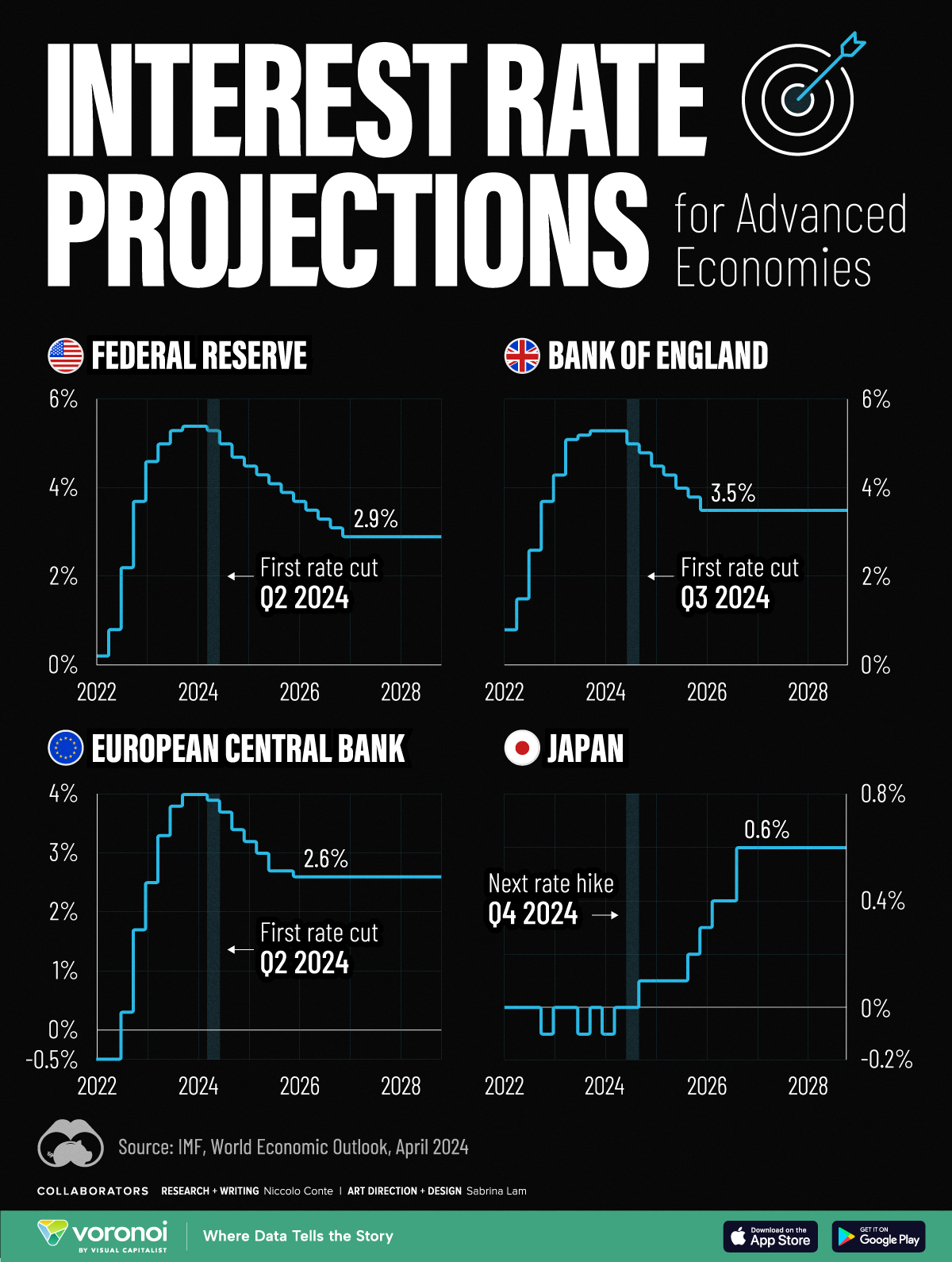

Central banks and interest rates: how they work, why they matter, and what to watch
Interest rates influence almost every part of the modern economy — from mortgage payments and government debt to stock markets and currency values. At the centre of this system sit central banks.
This explainer sets out what central banks do, how interest rates work, why decisions matter, and what signals policymakers watch when deciding whether to raise, cut, or hold rates.
What is a central bank?
A central bank is a public institution responsible for managing a country’s monetary system.
Its core objectives usually include:
-
Maintaining price stability (controlling inflation)
-
Supporting financial system stability
-
Managing the supply of money and credit
-
Acting as lender of last resort during crises
Most central banks operate independently of day-to-day politics, though their mandates are set by governments.
What are interest rates?
Interest rates represent the cost of borrowing money and the return on savings.
Central banks influence short-term interest rates by setting a policy rate, sometimes called a base rate or benchmark rate.
That policy rate affects:
-
Commercial bank lending rates
-
Mortgage and loan costs
-
Government borrowing costs
-
Currency values
-
Investment and spending decisions
Higher rates tend to slow economic activity.
Lower rates tend to stimulate borrowing and spending.
How central banks set interest rates
Central banks do not guess. They rely on a wide range of data, including:
-
Inflation measures (headline and core)
-
Wage growth
-
Employment levels
-
Consumer spending
-
Business investment
-
Financial market conditions
Policy decisions are typically made by committees that meet on a fixed schedule. Outcomes are communicated through official statements, press conferences, and published forecasts.
Why inflation is central to decisions
Inflation — the rate at which prices rise — is the primary focus of most central banks.
If inflation rises too quickly:
-
Purchasing power falls
-
Savings lose value
-
Economic planning becomes difficult
If inflation is too low:
-
Spending and investment may weaken
-
Debt burdens become harder to manage
Most central banks aim for a specific inflation target, often around 2%, though targets vary by country.
How interest rates affect everyday life
Changes in policy rates feed through the economy in several ways:
-
Households: mortgage rates, credit card interest, savings returns
-
Businesses: borrowing costs, expansion plans, hiring decisions
-
Governments: debt servicing costs and fiscal flexibility
-
Markets: stock valuations, bond prices, currency movements
These effects are not immediate. Monetary policy works with lags, sometimes taking months or years to fully impact the economy.
Beyond rates: other tools central banks use
Interest rates are not the only tool available. Central banks may also use:
-
Asset purchases or sales (often called quantitative easing or tightening)
-
Forward guidance (signalling future intentions)
-
Liquidity facilities for financial institutions
-
Regulatory and supervisory powers
These tools are often deployed during periods of stress or when interest rates approach very low levels.
Independence and political pressure
Central bank independence is designed to protect monetary policy from short-term political pressures. However, independence does not mean isolation.
Central banks regularly face:
-
Public criticism over rate decisions
-
Political pressure during economic slowdowns
-
Scrutiny when inflation or unemployment rises sharply
Balancing credibility, transparency, and flexibility is a constant challenge.
Common misconceptions
“Central banks control prices directly.”
They do not. They influence demand and expectations, not individual prices.
“Rate cuts immediately boost the economy.”
Effects take time and depend on confidence, credit conditions, and global factors.
“Central banks act alone.”
Fiscal policy, global markets, and political decisions all shape outcomes.
What to watch next
When following central bank policy, pay attention to:
-
Inflation trends relative to targets
-
Wage growth and labour market data
-
Shifts in official language (“restrictive”, “neutral”, “accommodative”)
-
Financial market stress indicators
-
Coordination — or divergence — between major economies
Small changes in tone often matter as much as formal decisions.
Why this explainer matters
Interest rates sit at the intersection of economics, politics, and markets. Understanding how central banks operate helps explain why borrowing costs rise, why currencies move, and why governments face constraints — even when policy goals are popular.
This page will be updated as frameworks, tools, and conditions evolve.
Sources
Central bank mandates and communications, economic data releases, academic research, and financial market analysis.
